
It’s time to be ordinary
The most important work most of us will ever do will not be documented. It will not be monetized. It will not go viral.

There is a woman in your city right now, who, after school drop offs checks a neighborhood group chat to see where ICE agents were spotted. She coordinates. She shows up. She films. She has no podcast. She has no brand sponsors and no “thought leadership platform.” She is just being a neighbor. She and others like her are the most important people in America right now.
When ICE agents were deployed to bone chillingly cold Minnesota, Minneapolis residents began organizing neighborhood patrols to monitor and disrupt immigration enforcement activity. Not as content creators. As neighbors. PTA moms formed the vanguard of community organizing to keep their kids’ classmates and educators safe.
Ordinary people. Uncommon outcomes.

What we’ve been told about success is a lie.
It involves a content calendar. A ring night. Messaging pillars. A newsletter funnel (the irony is not lost on me). The promise is this: if you optimize yourself as a product, market your expertise correctly, and build an audience large enough, then you’ll matter.
This is easily one of the most corrosive ideas of our time, of modern work - not because ambition is bad, but because this way of being is relentlessly, almost pathologically, self-centered. It tells you to treat your experience as inventory, your relationships as sales channels, and positions success as something you achieve alone, in public, for applause.
All at a moment when loneliness has been declared a public health crisis. According to the former surgeon general, being lonely has the equivalent health impact of smoking 15 cigarettes* a day. And the more we obsess over our personal brands, the lonelier and less useful we become.
So my invitation to everyone (including to myself) to be become just a little more ordinary. Because as it turns out, ordinary people achieve a lot (and might even have more fun doing it).
In 1897, two women - Alice McLellan Birney and Phoebe Apperson Hearst - founded the PTA* when women did not have the right to vote and social activism was not popular. They believed mothers would support their mission to eliminate threats that endangered children, and more than 2,000 people attended their first national convocation in Washington, D.C. That organization went on to champion child labor laws, juvenile justice reform, school lunch programs, and kindergarten. No one was building a personal brand. They were just mothers who decided that their children’s lives were worth fighting for, collectively.
A century later, in 1981, a woman named Patty Murray drove to the Washington State legislature with her two kids in tow to fight for funding for a parent education program. A legislator told her she had “a nice story” but couldn’t make a difference — that she was “just a mom in tennis shoes.” Murray served on a suburban school board, then the Washington State Senate, then won a U.S. Senate seat in 1992. She started as a PTA mom who showed up.
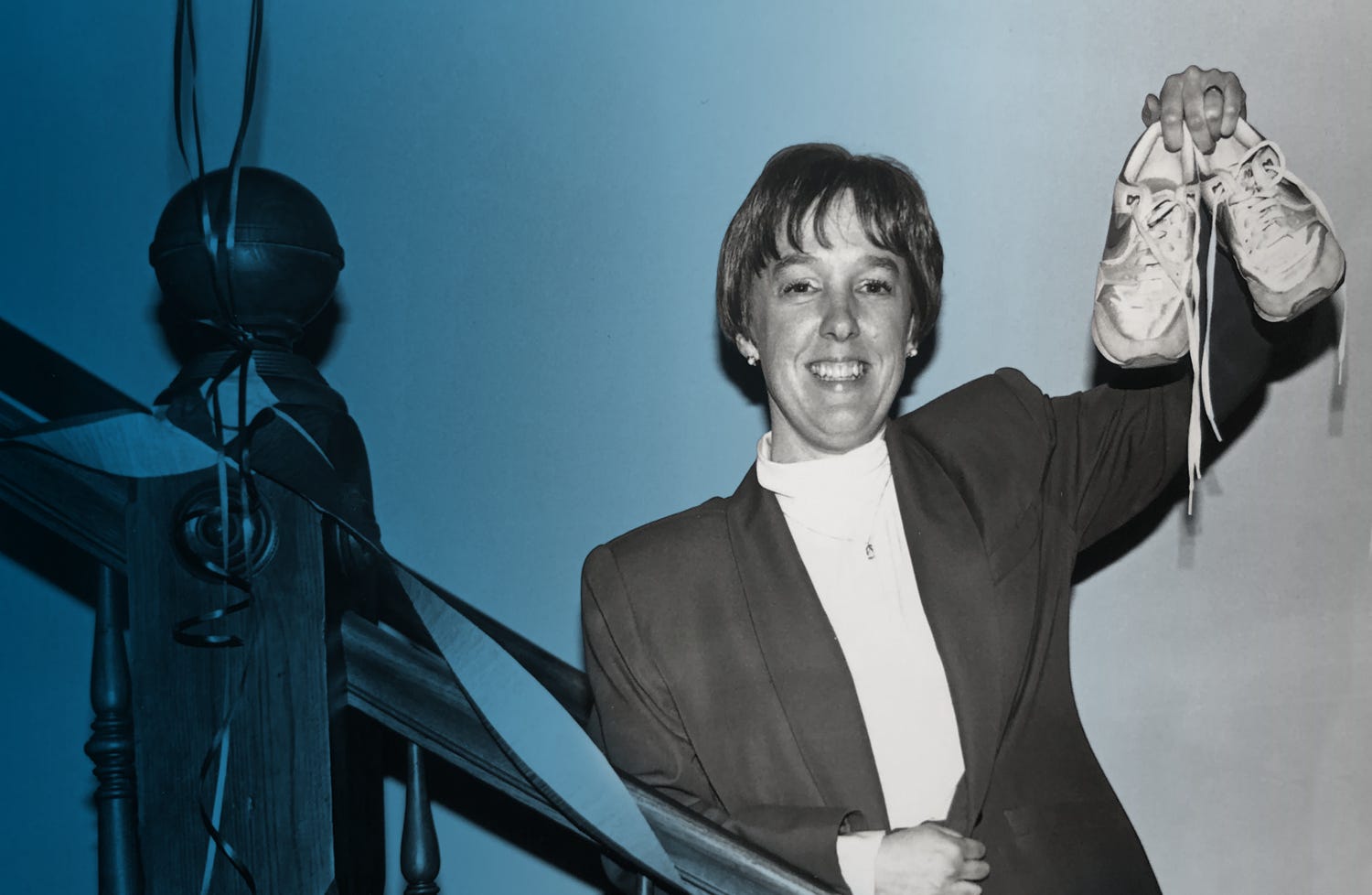
History is made by people who show up.
Not for virality, but for our common good. The Civil Rights Act, the abolition of child labor, the eight-hour workday, the right to vote - none of these were achieved by a personal brand consultant. They were achieved by people who decided that the common good was worth their inconvenience. Often their safety.
When I talk about showing up, people (ahhhhemmm) remind me that this fits the job description of a “community organizer”. Organizing is a niche career path rather than a baseline human responsibility.
So what does it actually look like to be ordinary?
It looks like checking out of work at 4pm and showing up to your city council meetings where decisions are being made about whether your neighborhood will get a park or parking lot. It looks like being the person who checks in on neighbors. Not because it makes for a good LinkedIn post, but because you were asked and you said yes.
In Minneapolis, protests took place in subzero temperatures (I feel cold just thinking about sub-20F temps, as I write this tucked under a blanket with a heating pad) - a march that brought out 50,000 participants. Hundreds of businesses closed in solidarity. Roughly one in four Minnesota voters either participated directly or had a close family member who did. All ordinary people - parents, nurses, pastors, teachers - who decided that their neighbors mattered more than their comfort.
That is what it means to be invested in the collective. Not performing investment in the collective. Not writing content about community while sitting alone in a home office. Actually being there, in the cold, for your neighbor.
The disease challenge of modern life is not laziness. It is the pernicious belief that nothing counts unless it’s visible, scalable, and personal brand-adjacent. That your value is determined by your follower count, not your follow-through.
Ordinary people don’t need an audience.
The most important work most of us will ever do will not be documented. It will not be monetized. It will not go viral. It will be the quiet, boring, essential labor of being a person who gives a damn about the people around them - not as a sales strategy, but as a way of life.
Be ordinary. The world needs it more than it needs another personal brand.
Just two ordinary humans having conversations about what it means to shift the paradigm of work, because we can’t change what we can’t name.
On Youtube + audio only https://creators.spotify.com/pod/profile/circlebackclub/
References
PTA https://www.pta.org/home/About-National-Parent-Teacher-Association/Mission-Values/National-PTA-History
Loneliness https://www.hhs.gov/sites/default/files/surgeon-general-social-connection-advisory.pdf